
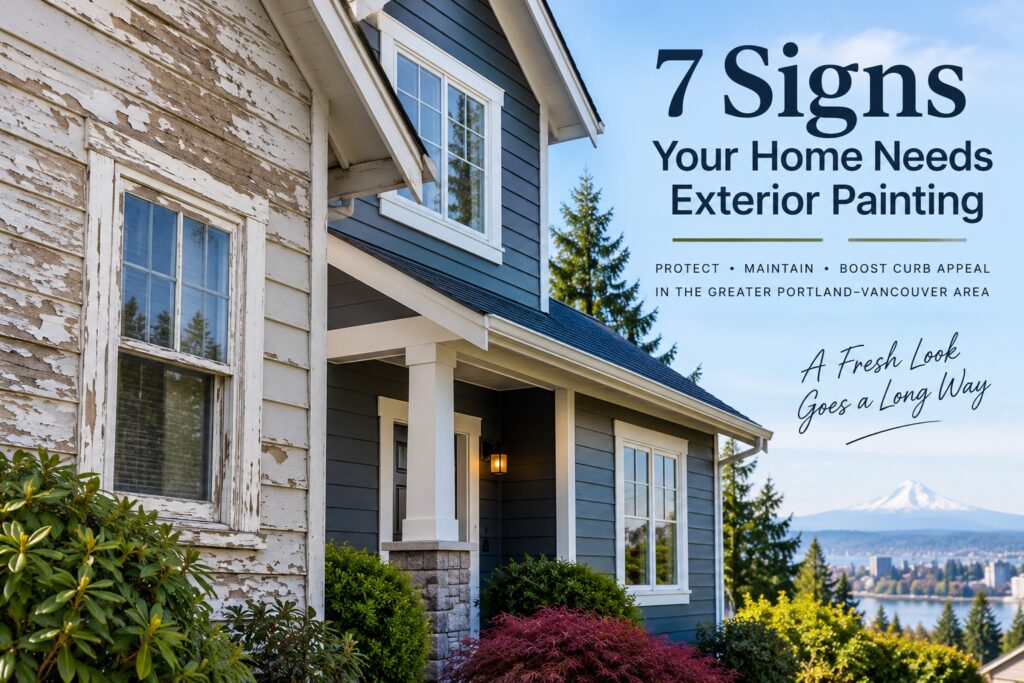
7 Signs Your Home Needs Exterior Painting in Portland & Vancouver
Your house doesn’t suddenly wake up one morning needing a new paint job. Usually, it gives you warning signs first.
For homeowners throughout the Greater Portland–Vancouver area, recognizing those warning signs early can be especially important. Our Pacific Northwest weather exposes homes to months of rain, moisture, changing temperatures, summer sun, and other conditions that can gradually wear down an exterior paint finish.
Exterior paint isn’t just about making your house look great. A quality paint system also helps protect siding, trim, and other exterior surfaces from the elements. When that protective coating begins to fail, waiting too long can lead to more extensive preparation or repairs later.
How can you tell when it’s time to call an exterior painting company? Here are seven signs to watch for.
1. Your Exterior Paint Is Peeling
Peeling or flaking paint is one of the clearest indications that your home’s exterior coating is beginning to fail.
Once paint separates from the surface, the siding or wood underneath becomes more exposed to moisture and weather. That’s particularly concerning around Portland and Vancouver, where wet conditions are a regular part of the year.
Painting directly over peeling areas isn’t the answer. Loose material needs to be properly removed and the surface prepared before new coatings are applied.
Important for older homes: If your home was built before 1978, deteriorating paint may contain lead. The EPA provides information about lead-based paint hazards and precautions homeowners should understand before renovation or painting work.
2. Your House Color Has Noticeably Faded
Maybe your house doesn’t look bad. It simply doesn’t look as vibrant as it once did.
Exterior paint gradually fades due to sunlight, moisture, weather, and age. You may notice that one side of the house looks considerably different from another because it receives more direct sunlight or weather exposure.
A new exterior color can refresh an aging home and dramatically improve its curb appeal.
3. You Can See Bare or Exposed Wood
Exposed wood is something homeowners shouldn’t ignore.
Paint provides a protective barrier between exterior wood and the environment. When that protection disappears, moisture can reach the material underneath.
In the Pacific Northwest, where homes regularly encounter wet conditions, addressing exposed wood early can help prevent a relatively simple painting project from becoming a larger repair project.
4. Your Exterior Caulking Is Cracking or Separating
Take a walk around your house and look closely at the areas around windows, doors, trim, and siding transitions.
Do you see caulking that is cracking, shrinking, or pulling away?
Exterior caulking helps seal joints and vulnerable areas. As it ages, it can lose flexibility and begin separating from surrounding materials.
Professional exterior painting should include careful inspection and preparation of these areas rather than simply applying new paint over them.
5. Your Paint Is Bubbling or Blistering
Bubbles and blisters in exterior paint can indicate that the coating has lost adhesion to the surface underneath.
There are several possible reasons for this, including moisture, improper previous preparation, or environmental conditions during an earlier application.
Whatever the cause, simply covering bubbles with another coat of paint usually won’t provide a lasting solution. The failing areas should be evaluated and properly prepared before repainting.
6. Your Siding Has a Chalky Appearance
Here’s a quick test you can perform yourself.
Gently rub your hand across a painted area of your siding. If a noticeable powdery residue comes off onto your fingers, the existing coating may be chalking.
Some chalking can occur naturally as exterior paint ages. However, significant chalking combined with fading or other signs of deterioration may indicate that it’s time to consider repainting.
Proper surface preparation is particularly important before applying new paint to a chalky exterior.
7. Your Home Simply Looks Tired and Dated
Sometimes there isn’t one major problem.
Instead, the exterior just looks old.
The color has lost its richness. The trim isn’t as crisp. There are small imperfections throughout the exterior, and you’ve found yourself saying, “We really need to paint this house.”
That counts.
A professional exterior paint job can completely transform the appearance of a home. Changing the body color, refreshing the trim, or updating accent colors can give an older house a dramatically different look without changing its architecture.
Don’t Let a Paint Problem Become a Siding Problem
One of the best times to repaint a house is before the exterior reaches the point of significant deterioration.
Quality exterior painting is about more than applying a new color. Proper preparation may involve cleaning surfaces, removing loose paint, sanding problem areas, addressing failed caulking, priming where necessary, and preparing the home so the new coating has a solid surface to adhere to.
At 1859 Painting, preparation is an important part of our exterior painting process because what happens before the finish coat goes on can have a major impact on the finished result.
If you’ve noticed peeling, fading, exposed wood, cracking caulk, bubbling paint, chalking, or an exterior that simply needs a refresh, it may be time to have your home evaluated.
1859 Painting provides professional exterior painting throughout the Greater Portland–Vancouver area, including Portland, Vancouver, Camas, Washougal, Battle Ground, and surrounding communities.
Ready to give your home a fresh look while protecting its exterior?
Contact 1859 Painting today to request a free exterior painting estimate.